
Are you DTF* ?
*Down to fund
The Sexual Pleasure Detection Device: A Nouns DeSci Initiative

What is the project?
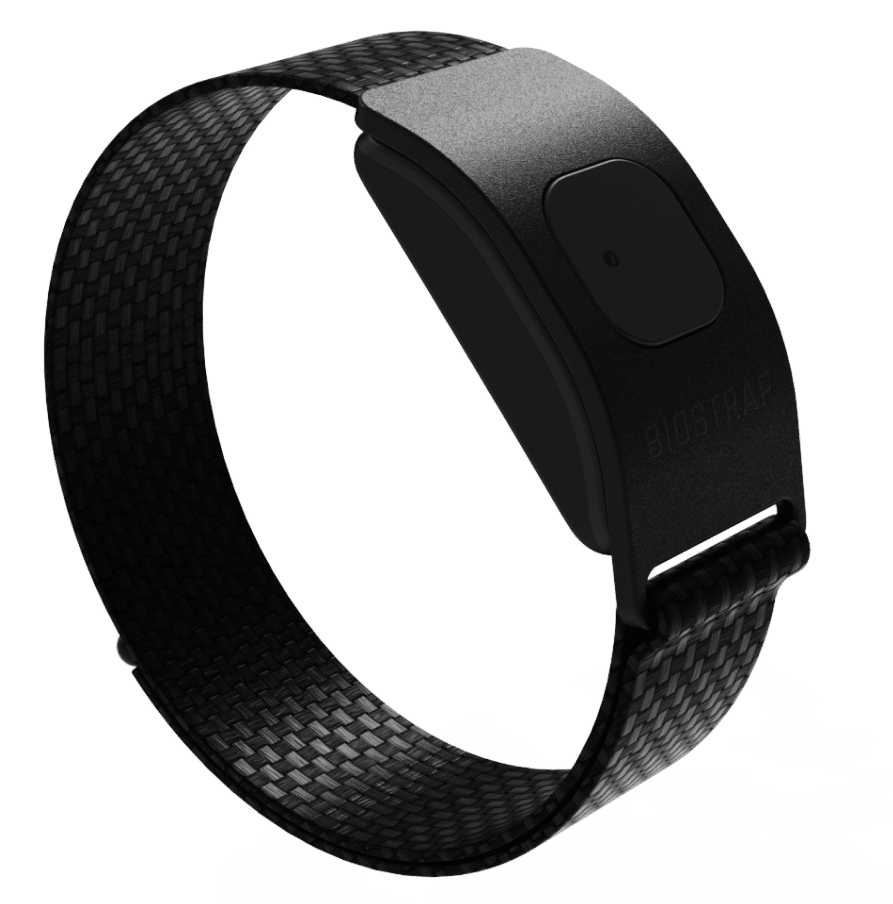
Develop an algorithm for a wrist-wearable tracking device that can measure sexual pleasure and orgasm.
Video version of this proposal
How will it proliferate Nouns
- This device can revolutionize sex research by enabling objectively measured (not self-report) sex studies conducted in a natural (not laboratory) setting, which is not possible with existing technology. The success of the device will amplify Nouns’ visibility and reputation, associating the DAO with unique, unconventional, and impactful scientific innovation.
- We will strengthen Nouns presence in DeSci narratives by highlighting Nouns’ contribution to this project in DeSci spaces, including at upcoming pop-up cities and on platforms like ResearchHub and DeScier. This heightened recognition will attract cool people and expand the Nouns community. DeSci is rapidly gaining mindshare in the Ethereum ecosystem, and Cosimo is deeply involved in the space through our various partnerships and initiatives.
- This project promotes Nounish values and subcultures. While sex can be considered to be a general human experience, it also has a growing subculture that aligns with the curiosity, openness, and collaborative energy associated with Nounish values.
How much funding you’ll need
95,000 USD
How the funds break down
Set up fee for device platform .…. 5,000 One year access to the platform …… 6,000 20 tracking devices @ 300/device .…. 6,000 One year research coordination (12hrs/week @ 50/hour) …. 31,000 Initial algorithm development (dev & compute resources) …… 40,000 Recruitment and marketing …. 7,000 Total: 95,000
What are the success metrics
- Collect novel dataset of sexual biometric recordings: Proceed with a new round of data collection, repeating our initial attempt and taking our learnings into account. We will need to recruit participants, distribute devices, and collect a variety of data (gender, different types of sexual activity, other types of activities, etc).
- Develop a sexual pleasure prediction model: Use the sensor data to develop the first biometric algorithm that can objectively predict orgasms and sexual pleasure.
- Showcase Nouns contribution to scientific innovation: Share project outcomes through publication on ResearchHub, DeScier, and at DeSci events, showcasing Nouns as an enabler of bold and impactful research.
Why It Matters
Sex is one of the most powerful human driving forces, shaping not only our social interactions and efforts towards our appearance, but sometimes our professional aspirations, personal goals, preferences, and identities (whether we are conscious of this or not). People are willing to go to incredible lengths to experience the deep, irreplaceable intimacy of connection with another person. And yet, once we get there, we often do not sufficiently understand what factors actually lead to a positive sexual experience.
The current field of sexual research is sadly lacking in vitality. For example, the Wikipedia entry on sex research in the 21st century is only four sentences long.
In the 1950s, Masters and Johnson were the first researchers to conduct sex research on subjects in the lab, resulting in the well-known “human sexual response cycle” theory. Today, there are some academic institutions (e.g. Kinsey Institute, Sage Lab) and a few independent researchers (e.g. Aella, Simone & Malcolm Collins) studying sexuality. However, experimental trials are rare due to the difficulty of recruiting participants, getting ethical approvals, and obtaining funding for potentially controversial research.
Even when we manage to conduct such studies, a lab environment almost certainly affects the subject’s sexual response. Imagine getting in the mood while hooked up to a vaginal or penile plethysmograph measuring the blood flow to your genitals. There is an opportunity to improve the generalizability of sex research by conducting it in a more realistic environment.

What is missing from sex research today is objectively measured (not self-reported) data that is collected in a naturalistic (non-clinical) setting. We believe that new technology in wearable tracking devices can enable this.
Our Initial Attempt
We had the opportunity to borrow a set of wrist-worn tracking devices for a period of several weeks. They are designed for research purposes, so unlike many popular tracking devices on the market, it was possible to access the raw sensor data that was recorded.
We distributed a few of these devices at a (“pop-up city”) conference. We asked people to record their data while engaging in sexual activity (either partnered or solo), and then press a button immediately after orgasm in order to label the event in the data.

In total, we recorded data from 5 different people across 15 sessions of sexual activity and 22 labeled orgasms.
Here is an example of a female participant’s recording of a 30 minute session of sexual activity during which she labeled three orgasms (the red dotted lines). The data are scaled so that they can be displayed on the same chart. It includes PPG sensors, SPO2, acceleration, and heart rate.
Notably, the third orgasm is the only one with a pronounced heart rate spike, although she subjectively felt that she came in each instance. This brings up an issue that will need to be considered – Can we trust the labeling of the data when it’s hard for people to tell if they had a “real” orgasm? And how do we define a “real” orgasm? Is it subjective, physiologically objective, or both?
Unfortunately, this example was one of the cleanest data recordings that we got. Due to several issues, including timestamp inaccuracy, inconsistent columns, and erroneous button presses, most of the data was too messy to include in statistical modeling.
Learnings and Future Directions
Although it did not result in much usable data, this pilot trial was very informative about how we can do better next time. We need a more reliable tool that can record raw biometric data with high frequency and accuracy. We also require an easy and accurate mechanism for labeling orgasms. (This is in no way a criticism of our partners, since the circumstances were such that they were unable to prepare the devices as they normally would. We thank them for graciously offering us free use of their devices.)
We need to go back to data collection, making sure we can collect biometric data with consistent columns across reporters, try to debug the timestamp issues, and see if we can use a better mechanism to record button presses. We would also ask for some baseline data from the participants, doing normal things that are not sex, to provide a comparison.
We should also refine our analysis by exploring heart rate patterns in greater detail. Specifically, we can estimate the curvature of the heart rate, developing a synthetic indicator that reflects the quick rise and fall. This is a commonly used technique in financial modeling. Early observations suggest that high heart rate combined with a significant negative heart rate curvature may correlate with orgasm, but we need to confirm this with more data.
Additionally, it would be beneficial to upgrade our hardware to capture individual heartbeats continuously, rather than relying on step function data, to enhance the accuracy and granularity of our findings. We have already discussed with another hardware provider that we believe will fit the bill for the requirements of this initiative.
Next Steps
- Collect new dataset of sexual biometric recordings: Proceed with a new round of data collection, repeating our initial attempt and taking our learnings into account. We will need to recruit participants, distribute devices, and collect a variety of data (gender, different types of sexual activity, other types of activities, etc).
- Develop a sexual pleasure prediction model: Use the sensor data to develop the first biometric algorithm that can objectively predict orgasms and sexual pleasure.
- Publish and promote results: Share findings among the DeSci community and beyond, highlighting Nouns’ contribution to the project.
Cost Estimates
Set up fee for device platform .…. 5,000 One year access to the platform …… 6,000 20 tracking devices @ 300/device .…. 6,000 One year research coordination (12hrs/week @ 50/hour) …. 31,000 Initial algorithm development (dev & compute resources) …… 40,000 Recruitment and marketing …. 7,000 Total: 95,000
About Us
I (Maia) am the founder of Cosimo Research, a scientific research service that investigates unconventional topics that are not addressed by traditional institutions. Cosimo is deeply integrated with the DeSci community through partnerships with ResearchHub, Biohacker DAO, and DeScier, and I participate in many DeSci events such as Vitalia, Edge Lanna, Edge Esmeralda, and DeSci London.


We have already conducted two novel scientific studies in the field of sex and human attraction – one on vabbing (using one’s vaginal fluid as perfume to attract men) and one on potential sources of male pheromones.
I am highly passionate about the development of this new technology which would allow us to expand our groundbreaking sex research in exciting new directions. I truly believe that it could revolutionize humanity’s scientific understanding of sexual pleasure. I love talking about this project, so please reach out with any questions. <3
| Voter | Cast Power | Vote & Rationale |
|---|---|---|
 0xcC26...0f6Ed5 | 36 | AGAINST |
 0x73E0...1677Ec | 23 | AGAINST |
 0xA868...079E63 | 5 | ABSTAIN |
 0xCEEd...4AD915 | 4 | ABSTAIN |
 0x4459...297E25 | 3 | AGAINST |
VOTE POWER
Proposal Status
- Mon January 06 2025, 04:26 amVoting Period Starts
- Fri January 10 2025, 04:56 amEnd Voting Period
- Queue Proposal
- Execute Proposal

Current Results
1-AGAINST
97
2-ABSTAIN
16
3-FOR
3